
How I Learned AI Without a CS degree
From analyst to AI product builder: the skills and projects that actually got me hired


These kinds of questions pop up in my DMs all the time:
“I want to build with AI, but I don’t have a technical background. Where do I even start?”
Most people assume they need a CS degree or years of coding experience before they can do anything meaningful with AI. They get stuck in tutorial hell, thinking they have to understand every algorithm before they ship their first product.
But that’s exactly backwards.
The builders launching real AI products aren’t the ones with perfect technical credentials. They’re the ones who start with domain expertise, pick a real-world problem, and learn by doing. They lean into what they already know while picking up just enough technical skill along the way.
I’m lucky I got to learn that lesson the easy way, through my learning by doing series with the GenAI projects. In the beginning, I tried to understand every cutting-edge paper (with help from AI!), and still felt overwhelmed. But once I focused on shipping, things clicked. I built products that actually made money. I met collaborators I still work with today. One of those people is Claudia Ng, one of the most inspiring builders I’ve come across online.
Like me, Claudia learned by doing. But her background is totally different: she went from financial analyst in Peru to building AI systems that help underserved populations access credit. No CS degree. No permission slip.
Over the past year, as I got to know her better, I knew you’d resonate with her story. She embodies so much of what we talk about here: using your existing skills as an advantage, prioritizing high-leverage learning over perfectionism, and building real products that solve real problems.
This is also a fascinating topic I’ve been exploring in a new three-part series I’m hosting next week (Oct 14-16): Adopt AI → Advance Your Career → Build Real Things. Because Claudia’s career journey is so different from mine (and so powerful), I invited her to co-host the second session with me. We’re sharing stories from both sides of the table, what’s actually working for people applying AI in their careers. You can check out more details here, and sign up (using coupon BTLFRIENDS to claim 25% off) if that sounds like something you need right now.
But first, I want to introduce a few pieces representative of her.
Now, let Claudia show you what’s possible, when you stop waiting for permission and just start building.
A decade ago, I was a financial analyst at a FinTech in Peru, running spreadsheets in Excel. Python was foreign to me, and AI felt like a world reserved for PhDs.
But I was passionate about one thing: how technology could expand access to credit for entrepreneurs. That curiosity started years earlier, on a summer program in the Dominican Republic. I saw firsthand how a US$20 microloan could transform a family’s life. That experience shaped my early career focus on financial inclusion, and eventually, I learned data science to make that impact at scale.

I quickly realized that the most effective way to learn AI wasn’t by watching tutorials, it was by building. The best lessons came from doing, and mistakes were part of the process.
The Mindset Shift: Stop Trying to Learn Everything
When I first decided to switch into data science seven years ago, I thought I had to master every algorithm, every corner of statistics, and every deep learning technique just to be “qualified” for interviews. I quickly realized that was impossible, and unnecessary.
About 20% of statistics and machine learning concepts cover roughly 80% of what I actually used on the job:
Neural networks? Rarely used in tabular data problems.
Boosting models (like XGBoost) dominate real-world tabular predictions.
If you’re considering a career transition, focus on the high-leverage 20% first. For aspiring data scientists, I’d start with:
Data cleaning, exploration, and visualization
Statistical foundations (distributions, hypothesis testing)
Regression, classification, tree-based models
Feature engineering with business context
Forget about deep learning for now; master the fundamentals first.

Learning by Doing and Leveraging Your Prior Experience
I worried my non-CS background was a weakness. But the opposite turned out to be true: your prior experience is an asset.
For me, my risk experience became the foundation for building machine learning (ML) models in credit risk. I focused on problems where my domain expertise mattered, like predicting creditworthiness for underserved populations. My perspective added value that purely technical candidates couldn’t replicate.
My first real AI experiment was on a dataset you might recognize: NYC taxi trips. Sure, it was generic, but I added a twist:
Built my first model predicting cab trip durations
Explored coordinates as features, learning geospatial feature engineering
Created a heat map visualization and animated screenshots to tell a story
I published a Medium post sharing my learning journey, and to my surprise, editors noticed. That small experiment launched my technical writing journey.

I applied the same approach in my role as a credit analyst at a FinTech:
Built ML models for credit and fraud risk, leveraging my domain expertise
Focused on building models that worked in the real world (no neural networks, sadly)
Gained years of experience implementing ML systems helping small businesses and entrepreneurs access financial services worldwide
Placed second in a Web3 credit scoring competition in 2024, proof that domain knowledge often matters more than the fanciest algorithms
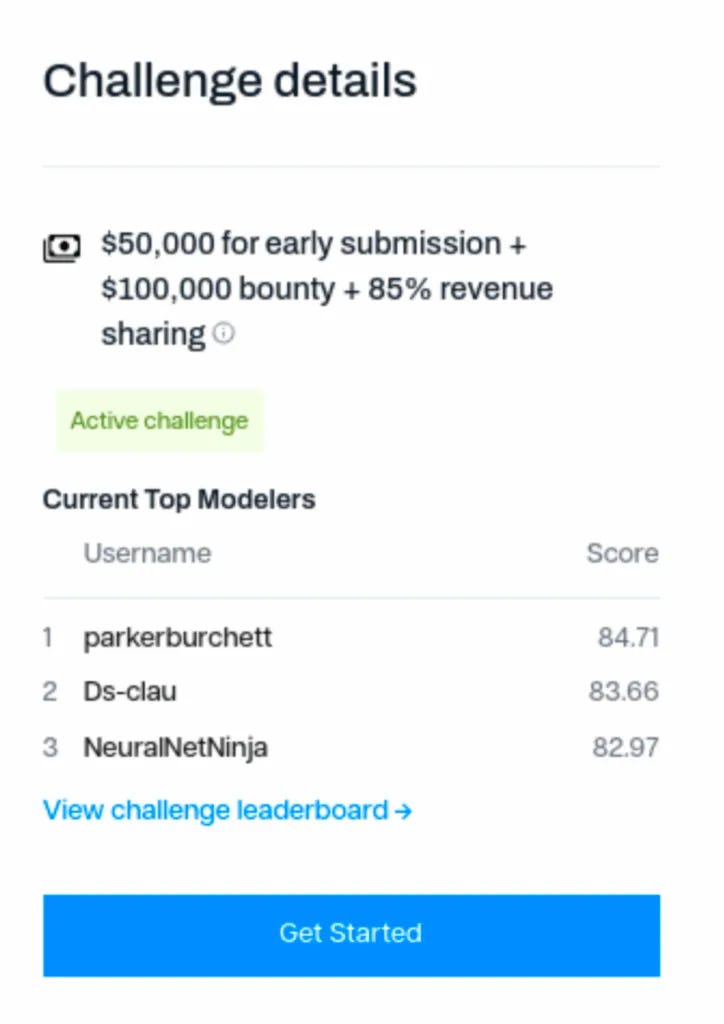
The pattern was always the same: learn by doing, share your work, focus on what matters.
How I Approach AI Product Learning
Every project teaches me something, whether it’s a small experiment or a full product. Here’s my framework:
Pick a small, concrete problem. Focus on something you can actually finish.
Leverage your domain knowledge. Your background gives you an edge in real-world applications.
Focus on high-leverage skills. Learn what will actually be used.
Build and share. Writing or publishing consolidates learning and builds credibility.
Iterate fast. Bugs and mistakes are lessons.
Even small projects (a heatmap, a simple model, or a blog post) compound into skills, confidence, and opportunities.
Your Next Steps
Many people get stuck in “tutorial hell”, spending months reading tutorials or watching videos without building anything. I did too.
The turning point for me was the NYC taxi project: I finally did, not just studied. Knowledge only counts when it’s applied!
Stop trying to know everything; focus on the high-leverage 20%.
Start building something, no matter how small.
Share your process publicly. Feedback and visibility accelerate learning.
Focus on business impact, not algorithmic perfection.
This approach is how I went from an Excel analyst to building AI products that help real users.
If you’re curious about step-by-step processes, lessons from experiments, and messy product launches, you can follow my journey on AI Weekender. I share real-world lessons on what works, what fails, and everything in between.
If Claudia’s journey resonates with you, check out her newsletter AI Weekender where she shares real-world lessons from building AI products that actually help people. No fluff, just honest insights from someone who’s been in the trenches.
And remember, you don’t need permission to start building. You just need to pick a problem you understand and solve it, one messy experiment at a time.
That’s how careers transform. That’s how real products get built.
 | A guest post by
|
Thank you. Just starting a new journey monetizing a new brand on AI. It's coming together. We have a lot in alignment. Thanks for sharing.
Awesome piece by two all stars, well done!!!