
I Handed My Substack Growth to Claude
Eight workflows, one MCP: digest your inbox, size a niche, study top creators, draft and schedule notes in your voice, and improve conversion.

A recorded Build to Launch workshop from July 10, 2026. I hand eight Substack growth workflows to Claude through one MCP, so the tracking-heavy parts of growing a newsletter run without me: digesting my subscriptions, sizing a niche, studying top creators, drafting notes in my voice, scheduling them, and reading which subscribers convert.

Claude runs my Substack growth now. For a long time, the thing slowing it down was me.
Not the strategy. Not the tools. Me.
I knew what to do to grow on Substack. I just could not keep up with doing it.
In the last six months, I moved houses twice. Twice.
Every writing cadence I had set, every posting schedule, every plan, I dropped most of them because I was living out of boxes.
On top of that: a full-time job and two little kids. There is not much spare time in that, and there is even less spare energy.
I kept coming back to the Pareto principle, the old 80/20 rule. Most of a job is the mechanical, repeatable, trackable part, call it 80%. The meaningful part, the judgment and the voice, is the 20% left over.
So I started asking simple question about Substack: what can I hand off, and what do I want to keep for myself? The answer turned into eight workflows.
Gradually, I took the parts of Substack growth I cannot realistically keep track of, and handed them to Claude. And only kept the parts I enjoy.
Of course, Claude did a much better job than I could (before March).
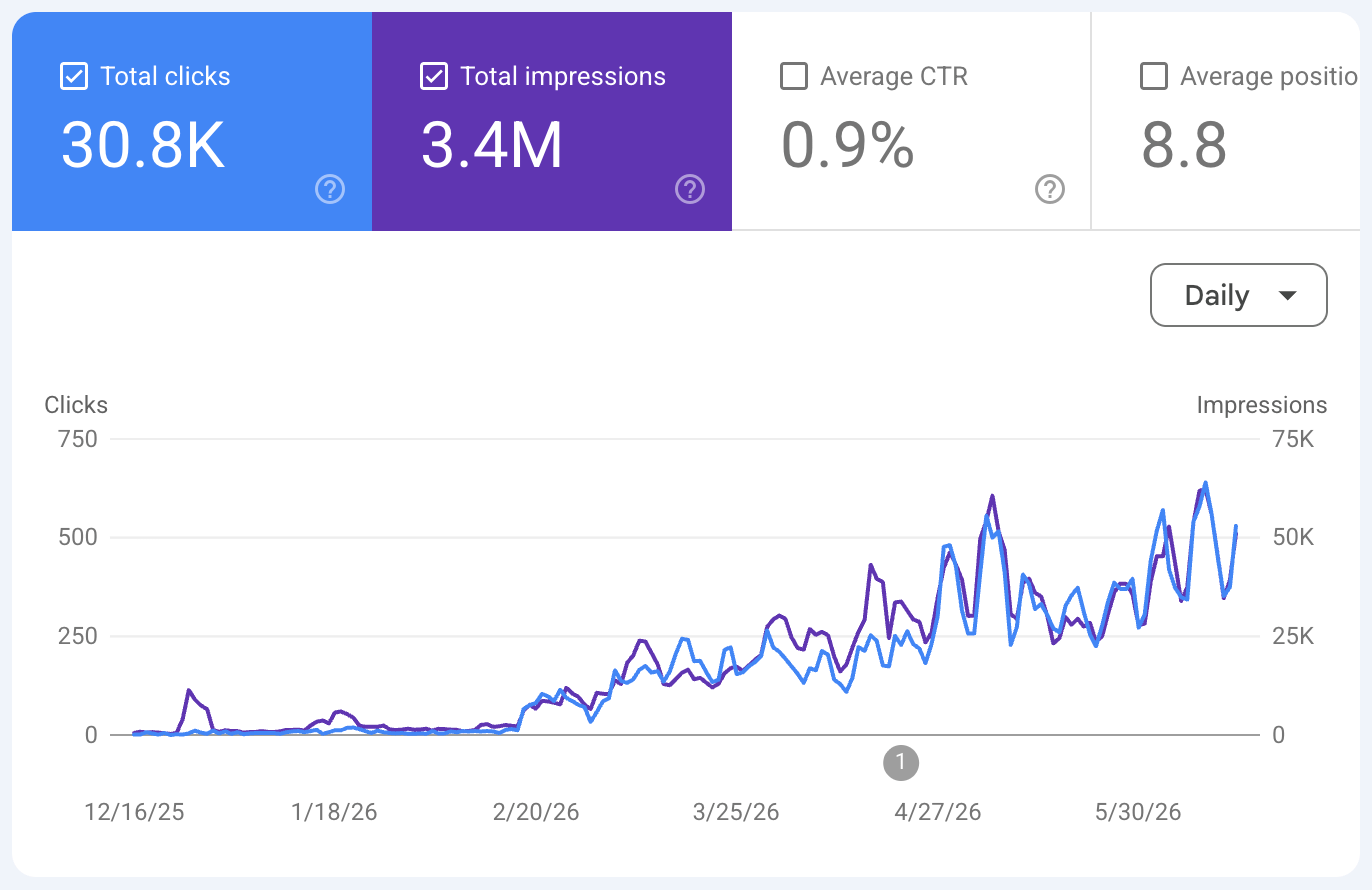
All Claude handled were just eight workflows that took over the 80% I used to grind through by hand. This session will break down all of them.
The Practical AI Builder Program is a live cohort for people who are already using AI but want to build practical systems that fit their work. This is the session recap for this month. If you want access to the full video, slides, and live-build outputs, they are in the Build to Launch community.
What’s inside:
The one MCP that runs all eight workflows (it is already included in your subscription)
The full live build, all eight workflows in Claude:
How to turn your entire subscription inbox into one scannable read
How to size a niche before you spend a month on it
How to tear down exactly how a top creator wins: their titles, their SEO, their cadence
How to turn one post into a week of notes in your own voice
How to schedule a week of notes and walk away
How to find the utility winner, the note that quietly did the work
How to rank your posts on real conversion and pull your next article ideas
How to read the subscribers you already have and see who actually converts
The complete loop, where measurement feeds the next week of writing
Live from the session: the workflow that broke on camera, how I debugged it, and what the room is using Substack for
🎁 The full recording, the deck, and all eight workflow prompts are in the Build to Launch community portal.

The Three Reasons You’re on Substack
I opened the session with one question in the chat: what are you using Substack for?
One, to learn and read. Two, to build your own publication. Three, to grow toward monetization.
Four people answered, and I got four different stages.
One was mostly here to learn. One was building his own publication. One named brand, one picked all three at once.
That spread is the point. Most of us do not live in one box. You start by reading, you drift into building your own voice, and eventually you want the work to pay you back.
The engine has three stages because the path has three stages, and it meets you at whichever one you are standing in.
This is the same arc I laid out in everything I have learned about growing on Substack. The difference now is that the manual clicking runs as workflows instead.
What I Hand to Claude
Across those three stages, I run eight workflows. Here is the whole set, in the order I reach for them.
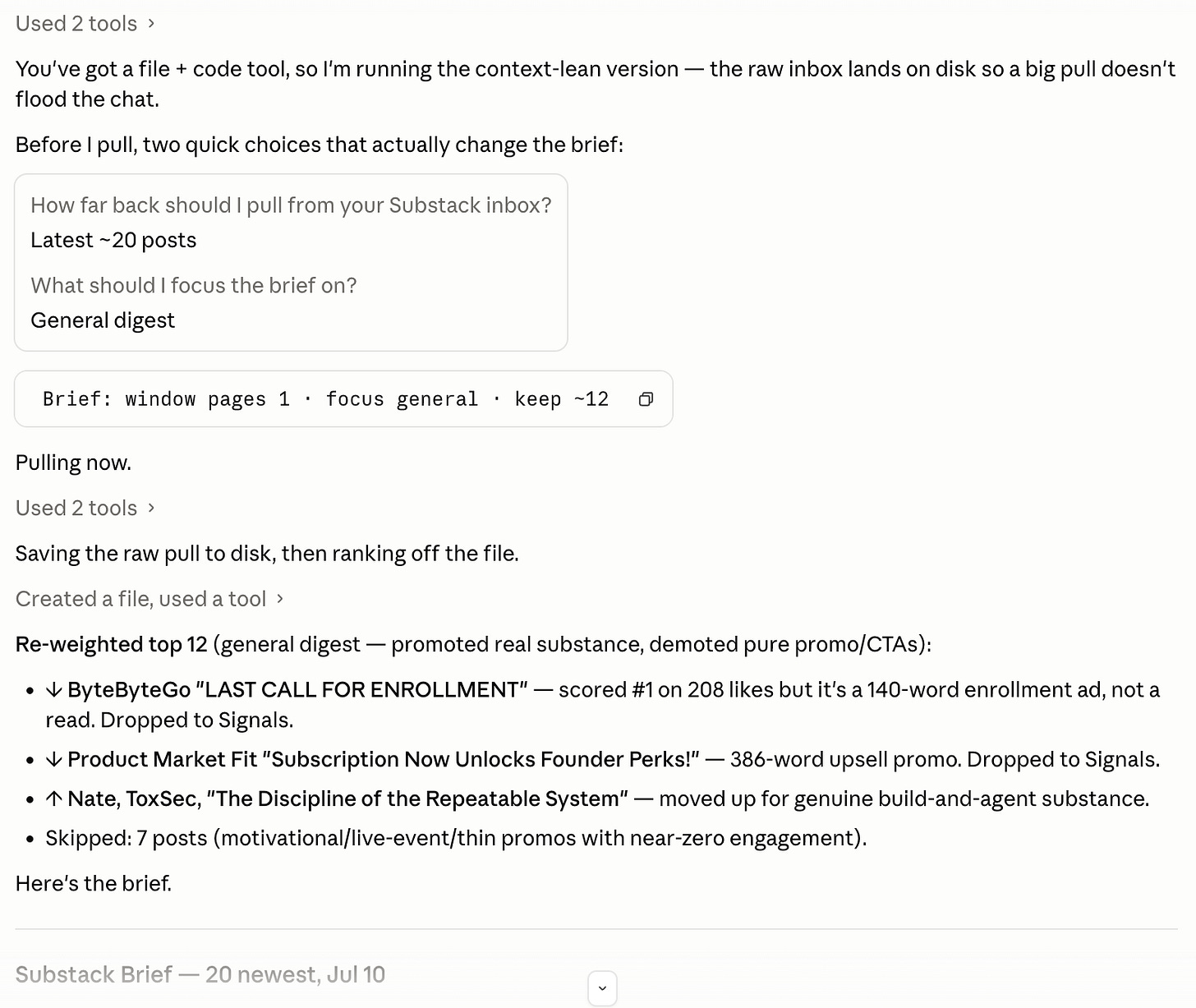
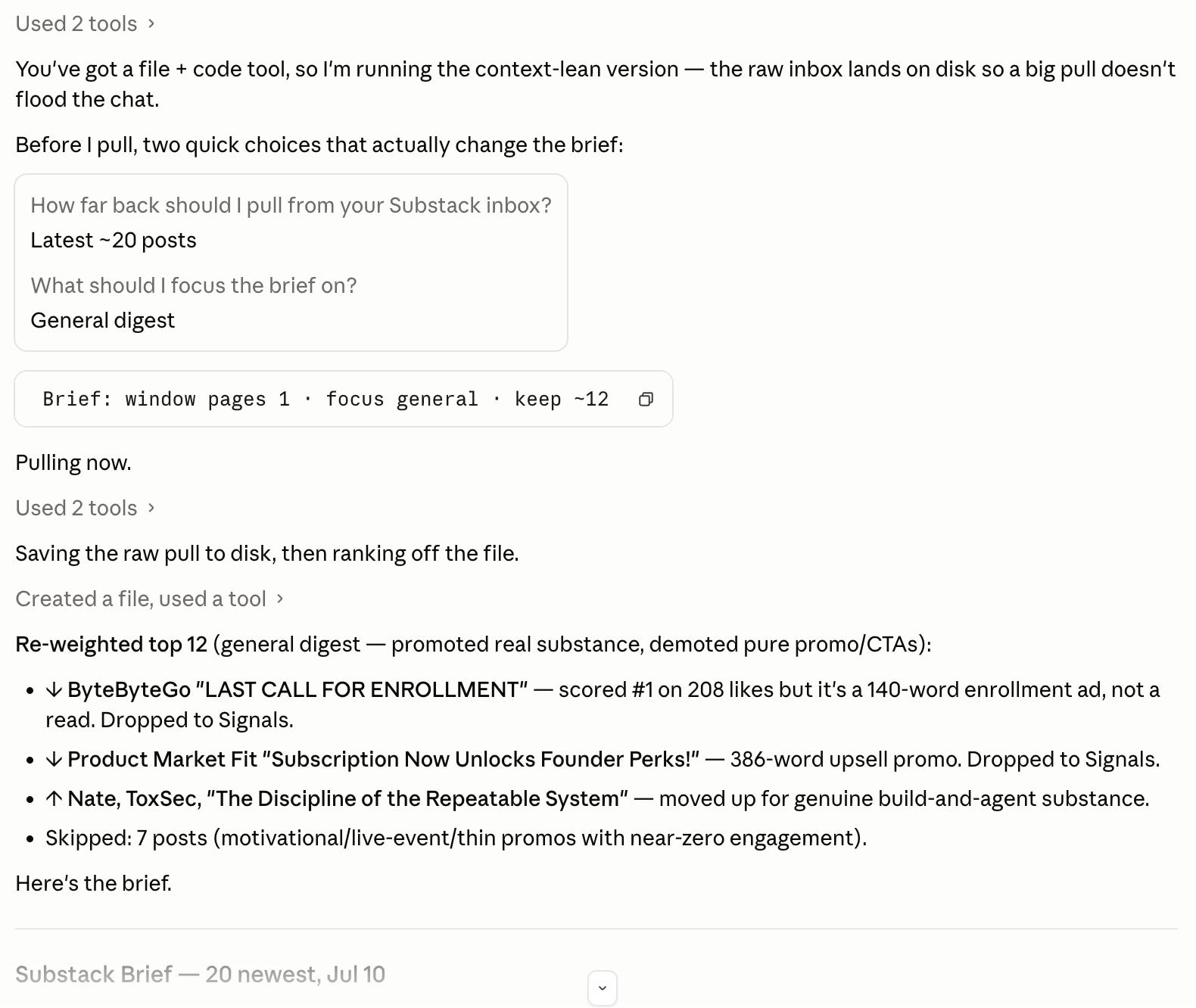
Subscription Brief turns my entire subscription inbox into one short, themed read. Reach for it when you follow more than you can keep up with and want the two worth opening today.
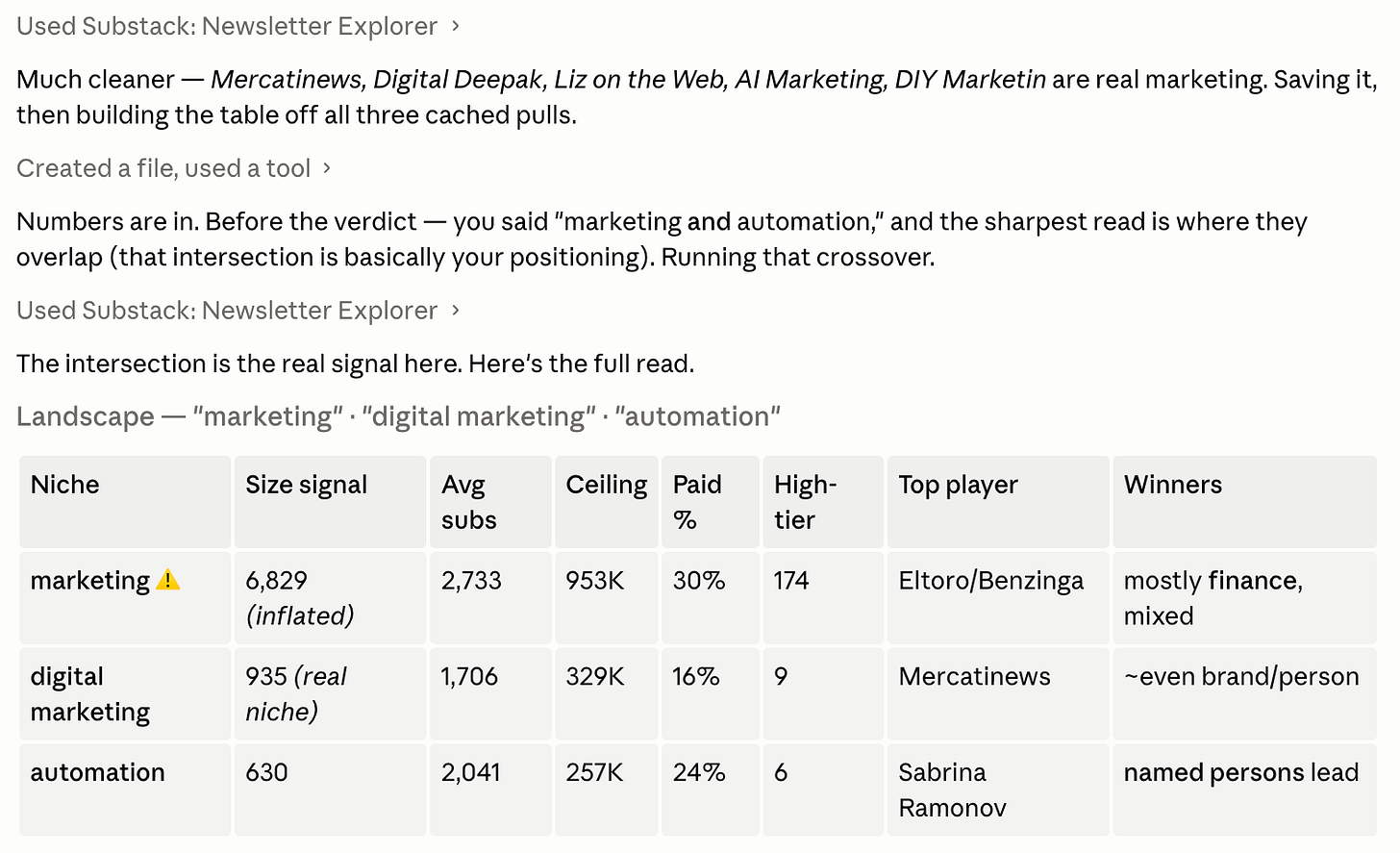
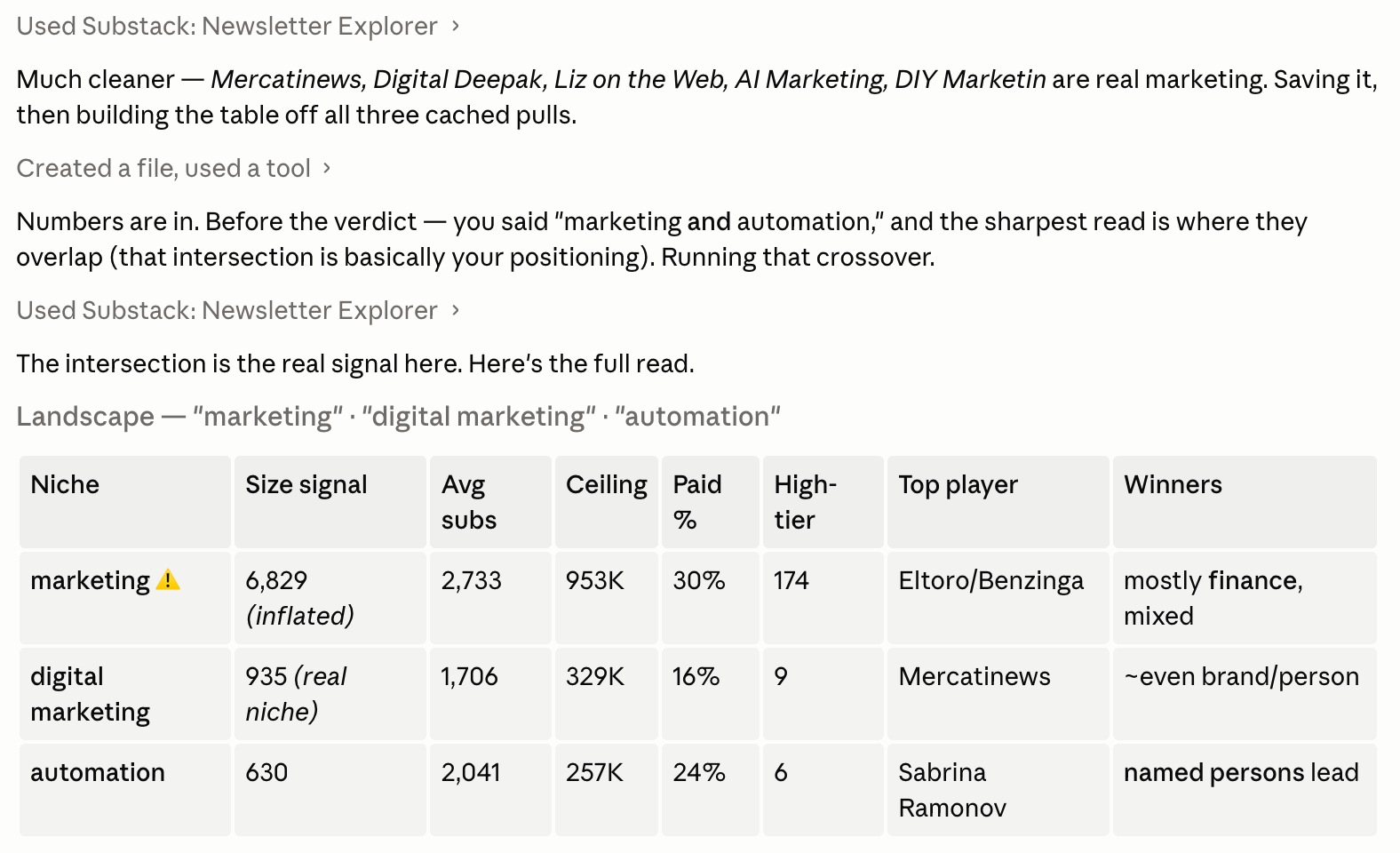
Landscape Explorer sizes a niche before I commit a month of my life to it. It is for weighing a topic or a pivot: how crowded it is, whether anyone pays, before you write a word.
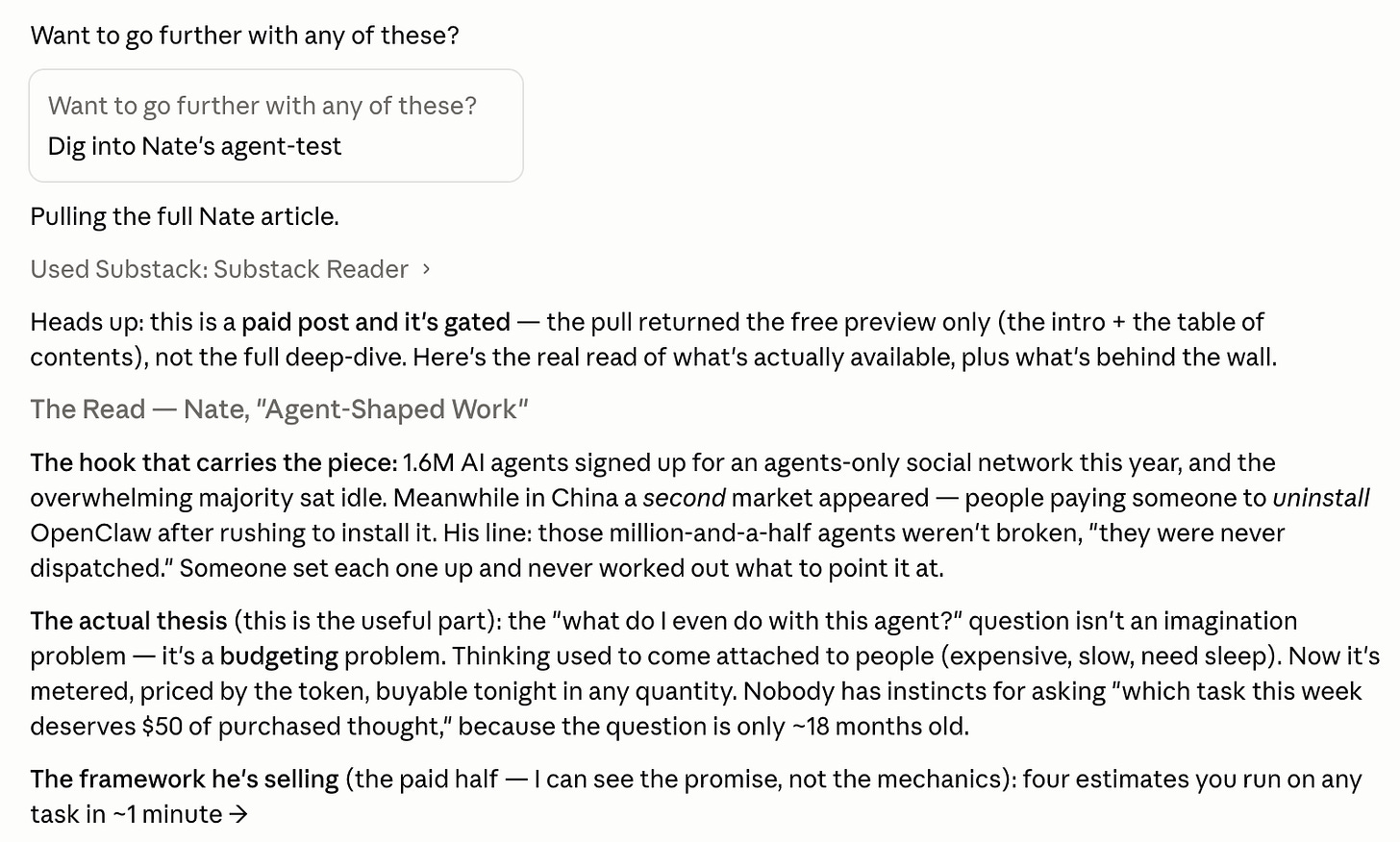
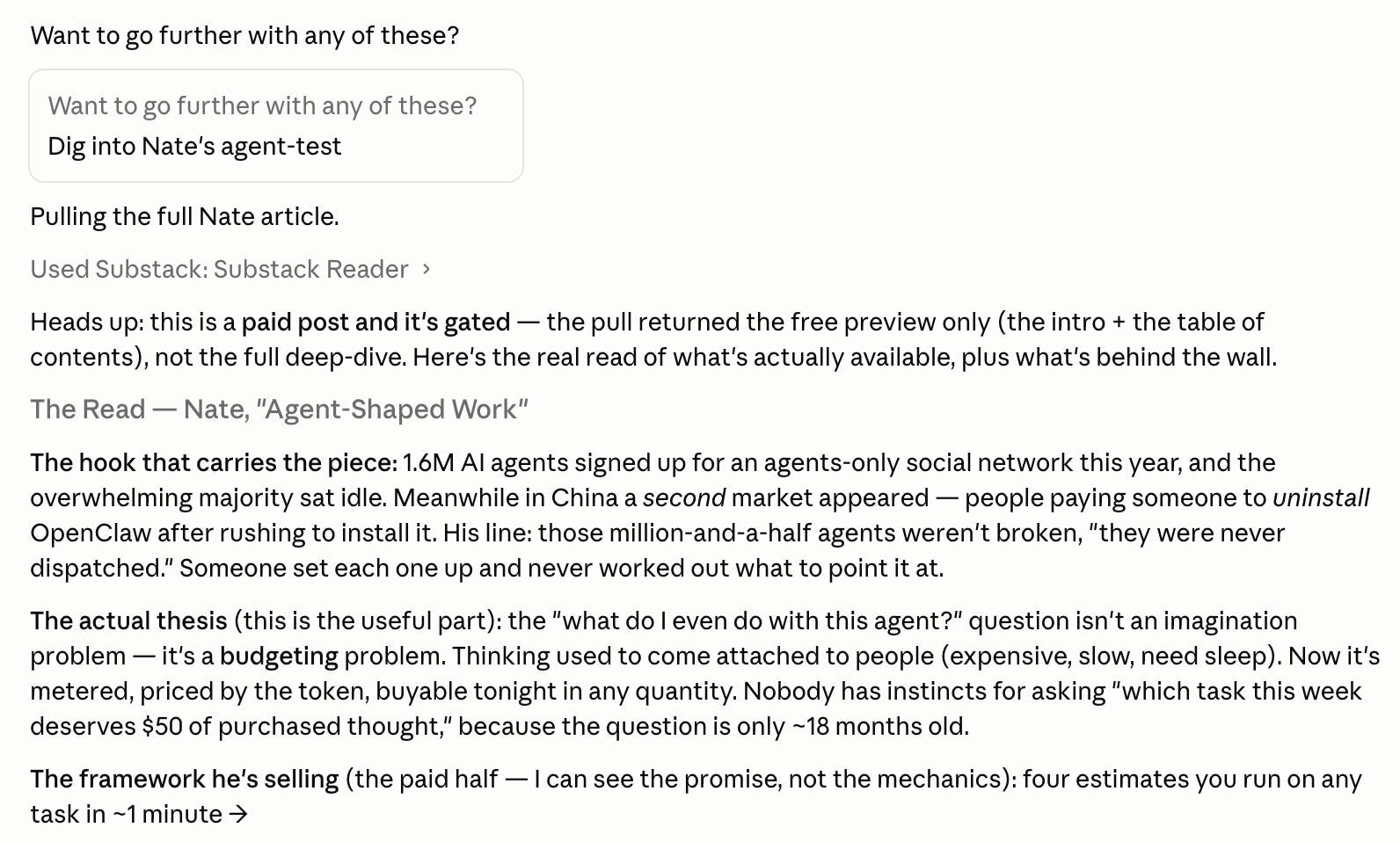
Creator Study tears down exactly how a top creator wins. Use it when someone in your lane is clearly working and you want their real playbook: their cadence, their titles, what they gate.
Notes Engine turns one long post into a batch of notes in my voice. This is daily visibility without daily writing: one article becomes a week of notes.
Scheduler queues those notes so I write once and walk away. It is for when you can write but cannot keep showing up.
Notes Performance tells me which notes worked, and which quietly did the work. Reach for it when likes are lying and you want the note that pulled clicks and subscribers.
Posts Performance ranks my articles on real conversion and hands me what to write next. Good for the blank page: your next ideas, each traced to a post that already converted.
Subscriber Study reads the readers I already have and shows who converts. Use it when you are chasing new subscribers and forgetting the list you already own.
You do not need all eight to start. You need the first one today, and the rest as each stage becomes practical for you.
If you are close to the beginning, this is how I grew a Substack from near zero.
The full live build
Here is what we built, step by step.